Does Breastfeeding Affect Child Oral Health More Than You Think?
Blog

Does Breastfeeding Affect Child Oral Health More Than You Think?

By Dr. R. Midhunraj
Published: 25 June 2026

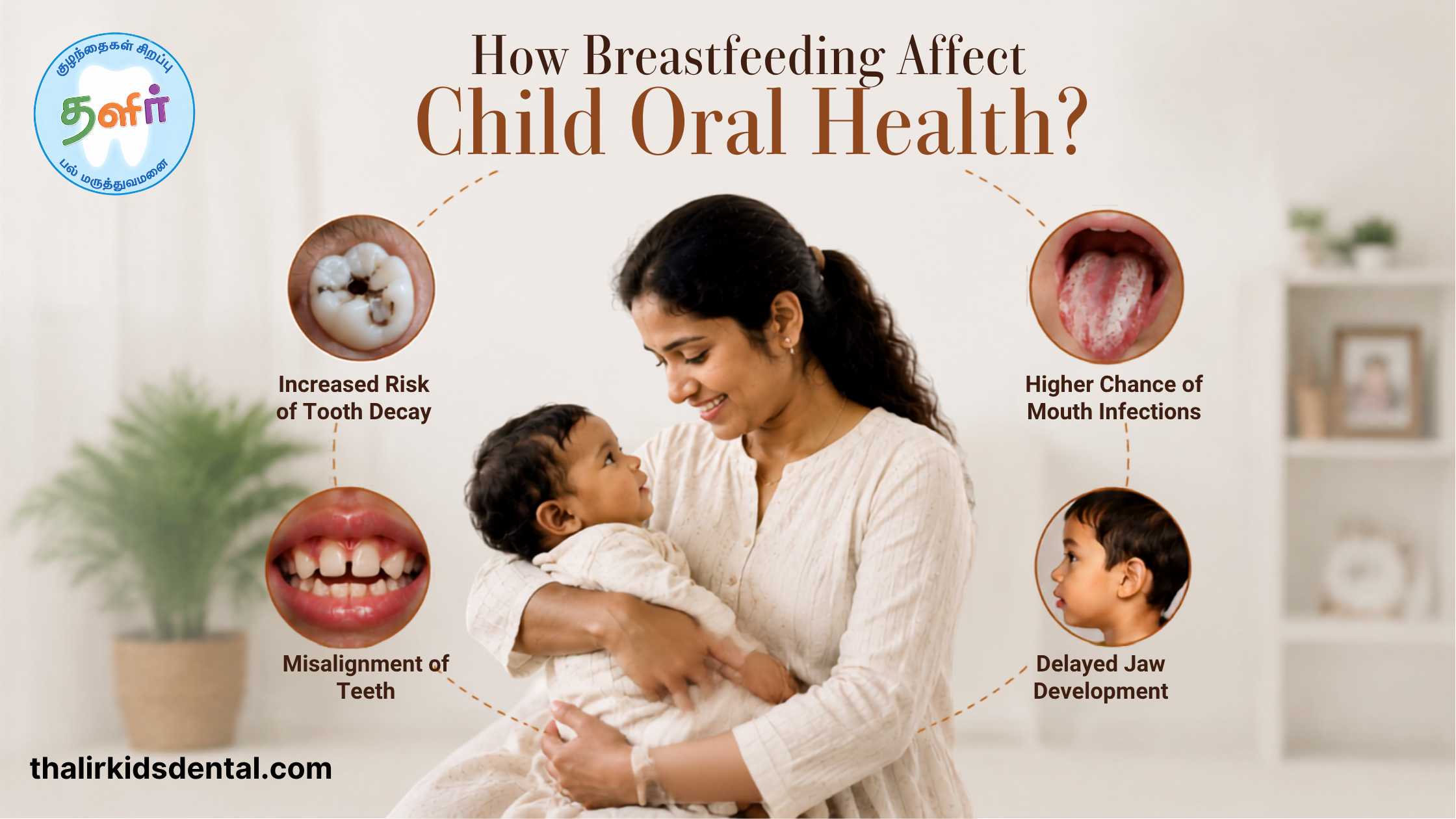
When parents think about breastfeeding, they usually focus on nutrition, immunity, and bonding. However, another common question is, does breastfeeding affect child oral health? The answer is yes, but not in the way many people believe.

Breastfeeding supports healthy jaw growth, facial muscle development, and your baby's overall well-being. At the same time, once the first tooth appears, good oral hygiene becomes an essential part of protecting your child's smile. Understanding this balance helps parents build healthy habits from the very beginning.

How Breastfeeding Supports Your Child's Oral Development?

Breastfeeding does much more than provide nutrition. The natural sucking action encourages proper development of the jaw, facial muscles, and palate while supporting your baby's overall growth.

Some important oral health benefits include:

  • Promotes healthy jaw and palate development.
  • Strengthens facial muscles needed for chewing and speaking.
  • May reduce the risk of certain bite problems compared with bottle feeding.
  • Breast milk provides important nutrients that support healthy growth and development.
  • Supports natural oral and facial muscle function during infancy.

Does Breastfeeding Affect Child Oral Health?

Current research suggests that breastfeeding itself does not increase the risk of tooth decay during the first year of life. Instead, your child's oral health is influenced by daily oral hygiene, feeding habits after the first tooth erupts, and regular dental check-ups.

According to the American Academy of Pediatric Dentistry (AAPD), parents should begin cleaning their baby's mouth from birth and schedule the first dental visit by the child's first birthday or within six months after the first tooth appears. Establishing these healthy habits early helps support strong teeth and healthy oral development throughout childhood.

Also read: Oral Health for Babies and Toddlers from First Feed to First Tooth

Can Breastfeeding Cause Cavities?

One of the biggest myths is that breastfeeding causes cavities. In reality, breastfeeding alone does not cause tooth decay.

Cavities develop when bacteria in the mouth interact with sugars over time. Poor oral hygiene after baby teeth appear increases the risk much more than breastfeeding itself.

Parents can help prevent cavities by:

  • Cleaning the baby's gums before the first tooth appears.
  • Brushing baby teeth twice a day.
  • Avoiding prolonged milk pooling around the teeth after the first tooth erupts.
  • Scheduling regular pediatric dental check-ups.

Night Breastfeeding and Baby Teeth

Many parents wonder whether night breastfeeding is harmful once teeth begin to appear.

Night breastfeeding is a normal part of infancy and provides comfort and nutrition. However, after your baby's first tooth erupts, cleaning the teeth before bedtime and maintaining good oral hygiene becomes increasingly important.

Simple habits such as gently brushing the teeth before sleep and visiting a pediatric dentist regularly help keep your baby's smile healthy.

When Should You Start Cleaning Your Baby's Mouth?

Good oral care begins even before the first tooth appears.

Parents should:

  • Wipe the baby's gums gently with a clean, damp cloth after feeds.
  • Begin brushing as soon as the first tooth erupts.
  • Use a soft baby toothbrush.
  • Use a smear of fluoride toothpaste as recommended by your dentist.
  • Help your child brush until they develop proper brushing skills.

Starting early helps establish healthy habits that last throughout childhood.

What Parents Should Watch For?

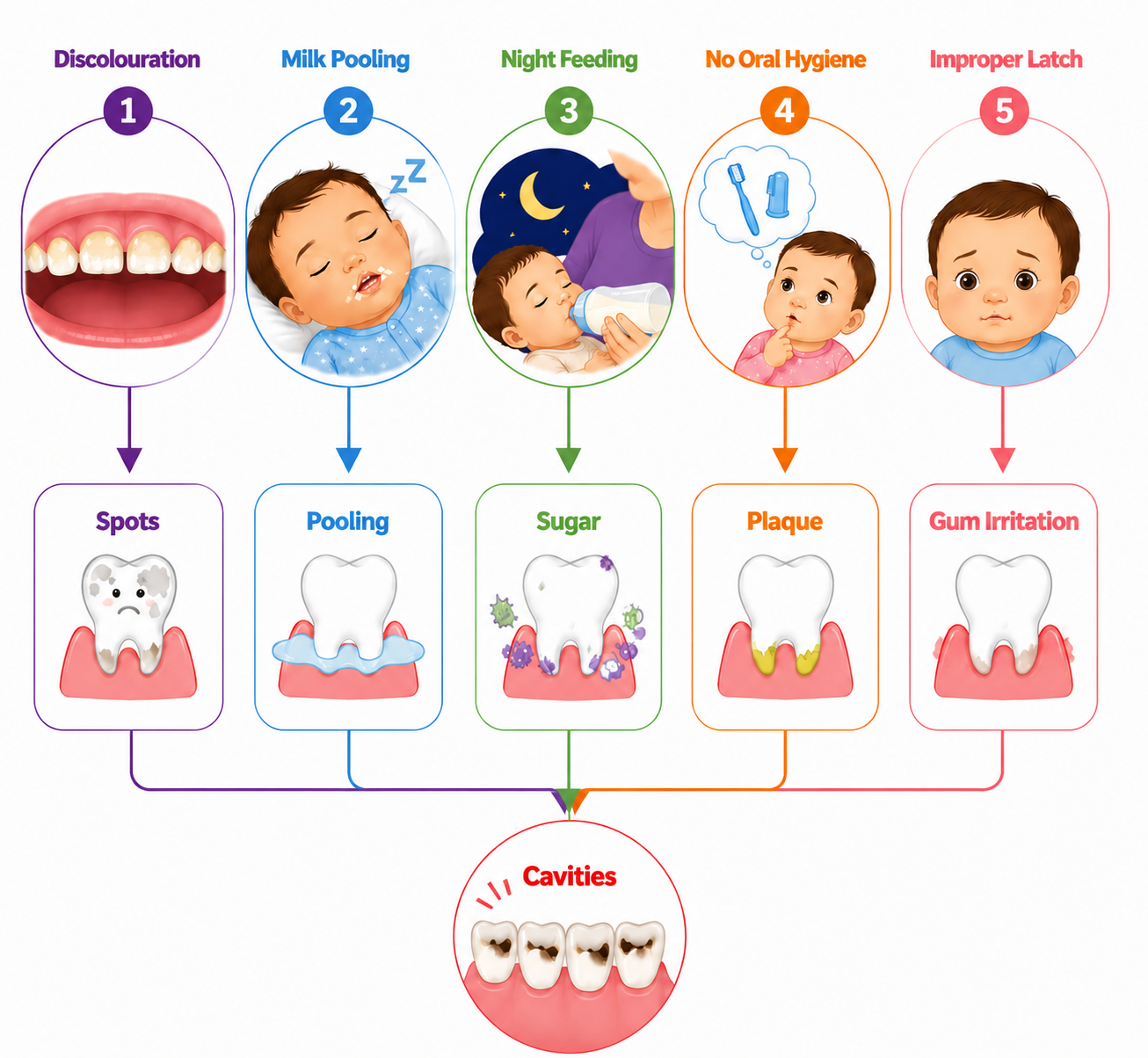
Most dental concerns do not come from breastfeeding itself. They develop because of oral hygiene habits after the baby's teeth begin to appear.

Watch for these signs:

  • Frequent night feeding after teeth have erupted without cleaning the teeth afterward.
  • Difficulty maintaining regular oral hygiene.
  • White or brown spots appearing on baby teeth.
  • Swollen or bleeding gums.
  • Delayed first dental visit.

Early dental care allows problems to be identified before they become more serious.

What Parents Should Watch For-Breastfeeding Affect Child Oral Health

Quick Dental Care Checklist

  1. Do not skip gum cleaning, wipe after every feed from day one
  2. Do not let your baby sleep with milk pooling around the teeth
  3. Do not ignore night feeds, they matter more than you think
  4. Do not wait for pain, watch for white spots on baby teeth early
  5. Do not delay the dentist, first visit by your child's first birthday

Acting early is always the right move. Parents who know the early signs of cavities in children can step in before small concerns grow into bigger problems.

When Should You Visit a Pediatric Dentist?

Your child's first dental visit should take place by their first birthday or within six months after the first tooth appears.

Early dental visits help:

  • Monitor healthy tooth development.
  • Detect early signs of tooth decay.
  • Teach parents proper brushing techniques.
  • Provide guidance on feeding and oral hygiene habits.

Give Your Child a Healthy Start

Breastfeeding is an important part of your baby's early development, but healthy oral care is equally important once the first tooth appears. By combining breastfeeding with good oral hygiene and regular dental check-ups, parents can help protect their child's smile for years to come.

For personalized guidance on breastfeeding and your child's oral health, visit Thalir Kids Dental Clinic. Our pediatric dental team is here to support your family through every stage of your child's dental journey.

Source: Breastfeeding and Oral Health: Evidence and Methodological Challenges

Frequently Asked Questions

Does breastfeeding cause tooth decay in babies?

No. Breastfeeding itself does not cause tooth decay. Once teeth appear, maintaining good oral hygiene is the most important factor in preventing cavities.

When should I start cleaning my baby's mouth?

Clean your baby's gums with a soft, damp cloth from birth. Begin brushing with a soft toothbrush and a small amount of fluoride toothpaste when the first tooth appears.

Is night breastfeeding harmful for baby teeth?

Night breastfeeding is normal. However, after the first tooth erupts, parents should clean their baby's teeth regularly and follow good oral hygiene practices to reduce the risk of tooth decay.

When should a breastfed baby visit a dentist?

The first dental visit is recommended by your child's first birthday or within six months after the first tooth appears.

Should I stop breastfeeding to protect my baby's teeth?

No. Breastfeeding offers many health benefits. Instead of stopping breastfeeding, focus on maintaining good oral hygiene and scheduling regular dental check-ups.

Can breastfeeding help jaw development?

Yes. The natural sucking action during breastfeeding supports healthy jaw, facial muscle, and palate development, contributing to healthy oral growth during infancy.

Frequently Asked Questions

Find quick answers to common questions about this topic.

Does breastfeeding cause tooth decay in babies?
No. Breastfeeding itself does not cause tooth decay. Once teeth appear, maintaining good oral hygiene is the most important factor in preventing cavities.
When should I start cleaning my baby's mouth?
Clean your baby's gums with a soft, damp cloth from birth. Begin brushing with a soft toothbrush and a small amount of fluoride toothpaste when the first tooth appears.
Is night breastfeeding harmful for baby teeth?
Night breastfeeding is normal. However, after the first tooth erupts, parents should clean their baby's teeth regularly and follow good oral hygiene practices to reduce the risk of tooth decay.
When should a breastfed baby visit a dentist?
The first dental visit is recommended by your child's first birthday or within six months after the first tooth appears.
Should I stop breastfeeding to protect my baby's teeth?
No. Breastfeeding offers many health benefits. Instead of stopping breastfeeding, focus on maintaining good oral hygiene and scheduling regular dental check-ups.
Can breastfeeding help jaw development?
Yes. The natural sucking action during breastfeeding supports healthy jaw, facial muscle, and palate development, contributing to healthy oral growth during infancy.
#Breastfeeding affect child oral health#Effect of breastfeeding on teeth#When to stop breastfeeding#Breastfeeding and tooth decay in babies#Breastfeeding and baby teeth development#Pediatric dental clinic in Erode#Kids dental care Erode#Child dentist near me Erode#Does breastfeeding cause tooth decay in babies#How long should I breastfeed for healthy teeth#Is breastfeeding bad for baby teeth#What happens to baby teeth during breastfeeding#How to protect baby teeth while breastfeeding#Thalir Kids Dental Clinic Erode#Thalir

Have questions about your child's dental health?

Our specialists at Thalir Dental Clinic are here to help.

Chat with Us